OptimalMD
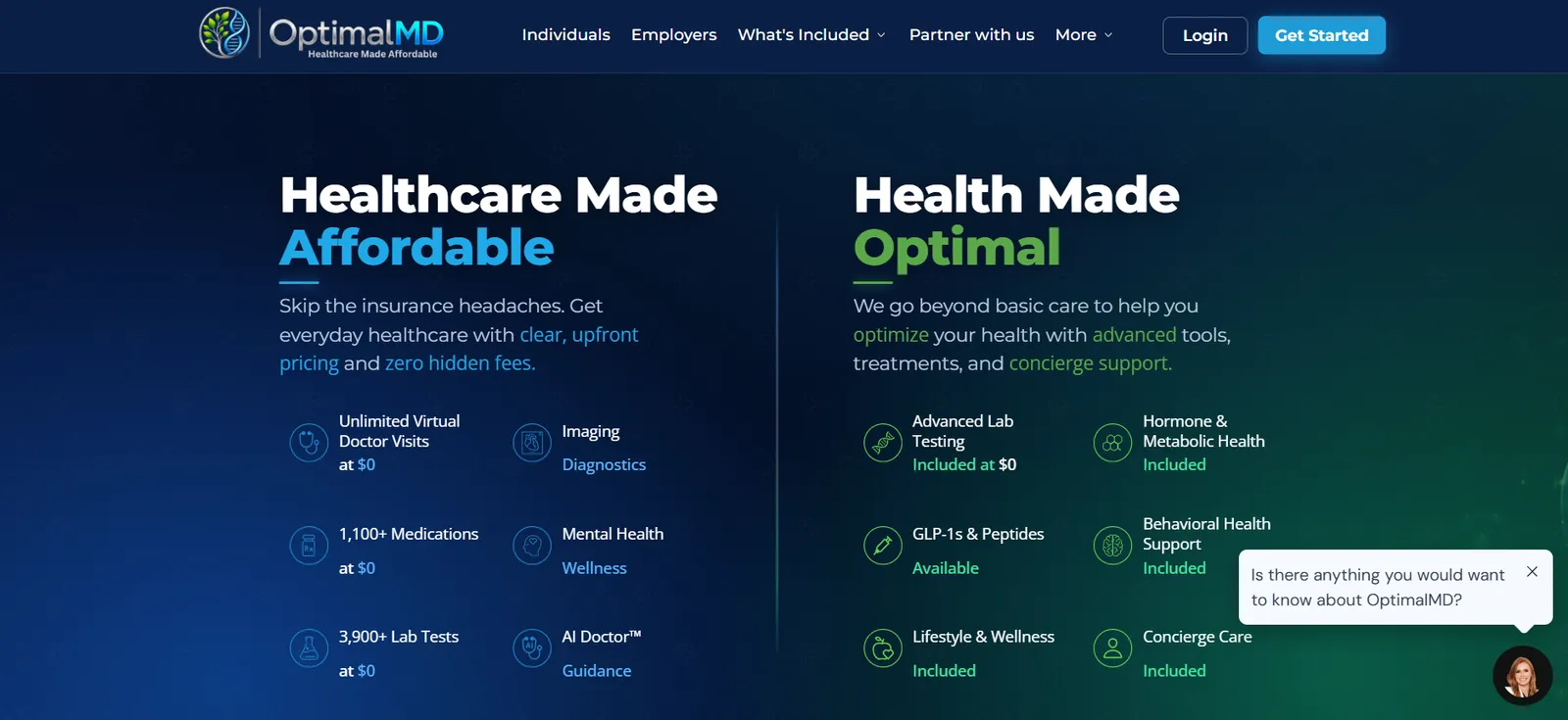
A digital healthcare platform providing members and employers with healthcare access, virtual care, medications, labs, specialists and AI-assisted healthcare features.
- My role
- Software Engineer / Backend Developer
- Timeframe
- 2025–present
- Team
- Cross-functional development team at Octopi Digital LLC
Overview
OptimalMD is a digital healthcare platform for members and employers, covering healthcare access, virtual care, medications, labs, specialists and AI-assisted features.
I work on backend functionality for membership and application workflows, the APIs that connect the frontend to backend services, healthcare-related integrations and AI-enabled features.
The problem
The platform combines traditional healthcare workflows with AI-assisted functionality. The AI features have to fit into the existing application flow rather than work as an isolated add-on.
My role
What I did
- Developed and maintained backend functionality supporting healthcare membership and application workflows.
- Worked on API-driven functionality connecting the application frontend with backend services and data.
- Implemented and maintained integrations required for healthcare-related workflows and member-facing functionality.
- Worked on AI-enabled application functionality and supporting backend services.
- Troubleshot and maintained production application functionality across backend and infrastructure layers.
- Collaborated with the wider development team on frontend and full-stack application features.
What the wider team did
- Frontend development and product/UI work.
- Healthcare workflows and other application functionality.
Technical approach
Web and mobile clients call authenticated backend APIs built with Node.js and Express, which serve member and application data.
AI-enabled features sit behind the same application-level APIs, and their output feeds into the normal application workflow.
Architecture and integrations
Text version of the diagram
Web and mobile clients call authenticated backend APIs, which read and write member and application data. An AI-enabled feature is reached through the same API layer, and its output feeds into the healthcare application workflows, which also connect to healthcare-related integrations.
- Web & mobile clients → Backend APIs: authenticated
- Backend APIs → AI-enabled feature
- Backend APIs → Member & application data
- AI-enabled feature → Healthcare workflows: output
- Healthcare workflows → Member & application data
- Healthcare workflows → Integrations
Challenges and solutions
Fitting AI into existing workflows
Challenge: AI-assisted functionality had to fit into the existing healthcare application flow rather than operate as an isolated feature.
Solution: AI functionality was kept behind application-level APIs, and its output was connected to the normal application workflow.
Outcome
- Production healthcare platform supporting healthcare access and AI-assisted healthcare functionality.
Technology stack
- Node.js
- Express.js
- TypeScript
- JavaScript
- React
- MongoDB
- Mongoose
- Firebase
- REST APIs
- Git
- GitHub
- Linux VPS